 PURIX
What is plated gold?
Gold plating is a method of applying a thin layer of gold to the surface of another metal.1 The outside of the piece is gold-coloured, but its body is another metal. For example, a gold-plated silver piece is usually made by applying layers of copper, nickel and gold, in that order, over a silver body.1
On a plated piece, the gold layer on the surface may have a karat; but that karat describes only that thin layer, not the whole piece. That is why plated gold is not the same as solid gold of the same colour.
Types and thicknesses of plating
Plating thickness is given in microns; 1 micron is one thousandth of a millimetre.1 The thicker the layer, the longer the plating lasts.1 The types you often come across in jewellery are:
| Type | How it is made | Gold layer |
|---|---|---|
| Gold flash (gold wash) | Very thin plating | Less than 0.5 micron 1 |
| Gold plated | Plating | 0.5 micron and above 1 |
| Heavy gold plated | Plating | 2.5 microns and above 1 |
| Vermeil | Gold plating over a silver body | At least 2.5 microns 4 |
| Rolled gold plate | Gold alloy bonded to the body mechanically | At least 1/40 of the total metal weight 2 |
| Gold filled | Gold alloy bonded to the body mechanically | At least 1/20 of the total metal weight 2 |
In gold filled and rolled gold plate, the layer is at least 10 karat and the karat is written in front of the product name.2 The gold layer in gold-filled pieces is 5 to 10 times thicker than ordinary plating; the body is usually brass.3
The weight and karat thresholds are the definitions in the US Federal Trade Commission's jewelry guides.24
What should you look for in the stamp?
On plated and filled pieces, the stamp carries a fraction or an abbreviation next to the karat. The most common stamps on gold filled are 1/20 12K GF and 1/20 14K GF, and on rolled gold plate marks such as 1/40 10K RGP.3 According to the US guide, the karat is also written in front of the product name for electroplating; for example "12 Karat Gold Electroplate".2
So if "12K" or "14K" in the stamp has a mark such as GF or RGP next to it, it shows the karat of the surface layer, not of the whole piece. The fraction is the gold layer's share of the piece's total metal weight: 1/20 means one twentieth of the weight.23
How does plating show over time?
How long plating lasts is determined by its thickness.1 With use, the gold layer wears away and the metal underneath becomes visible. Gold-filled pieces can last 10 to 30 years in daily use; but the gold layer eventually wears away and the metal underneath comes through.3
Even without wear, the colour can change: in pieces with a silver body, silver atoms diffuse into the gold layer; copper also passes into the gold, but more slowly than silver.1 Depending on the thickness of the layer, this diffusion can lead to tarnishing within months or years.1 Seeing a different colour on the edges or on worn spots is a sign that suggests plating; but the definitive answer comes from measurement.
Step by step at the jeweller's counter
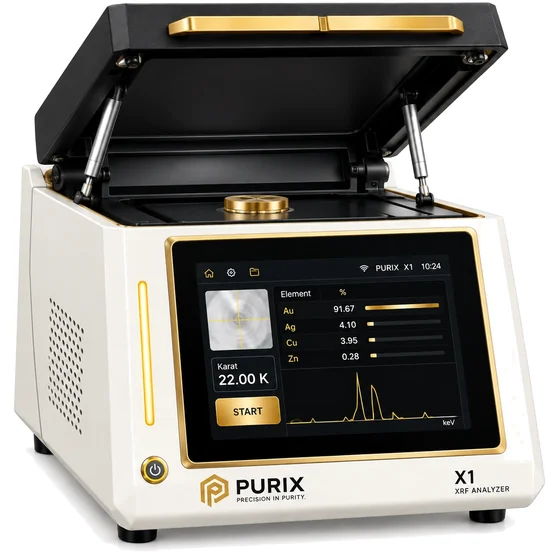
XRF measurement does not harm the piece; but it works on the surface.5 That is why the stamp, signs of wear and the measurement result are assessed together; if a thick layer is suspected, a result taken at a single point is not enough.
FAQ
Are gold plated and gold filled the same thing?
No. In gold filled, the gold alloy is bonded to the body mechanically and makes up at least 1/20 of the total metal weight; the layer is 5 to 10 times thicker than ordinary plating.
If the stamp says 14K GF, is the piece 14 karat?
No. 14K is the karat of the gold layer on the surface; GF shows that the piece is gold filled. The body is another metal.
What does vermeil mean?
It is a piece with gold plated over a silver body; according to the US guide, the gold layer must be at least 2.5 microns.
Does gold plating wear off over time?
Yes. How long plating lasts is determined by its thickness; where the piece rubs, the layer wears away and the metal underneath can show.
Does XRF reveal every kind of plating?
XRF measures the surface. With thin plating, the base metal underneath shows up in the result; if you suspect thick plating or a filled piece, measure at several points; a destructive test may be needed.
All values are measured under the manufacturer’s test conditions and may vary with the shape and surface of the sample.
Karat isn’t guessed. It’s measured.
Try the live analysis to see how a measurement looks on screen, or request a quote for your business.